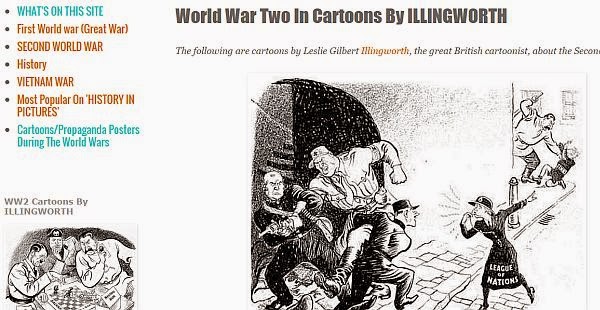
Leaders and opinion makers of all Allied countries hated the Germans by the end of the war.
We have read and heard about WW2. About how evil the Germans were. Concentration camps. Extermination camps. Holocaust. Ethnic cleansing. Brutal treatment of Russian POW on the Eastern Front. True. But this is only one side of the story......
In 1945 when Germany lost the war, it was treated by the Allies in a manner that can be, at best, be termed as inhuman. Read on...
There are no angels in this world....
We hear a lot about terrible crimes committed by Germans during World War II, but we hear very little about crimes committed against Germans. Germany’s defeat in May 1945, and the end of World War II in Europe, did not bring an end to death and suffering for the vanquished German people. Instead the victorious Allies ushered in a horrible new era of destruction, looting, starvation, rape, “ethnic cleansing,” and mass killing --one that Time magazine called “history’s most terrifying peace.”
Even though this “unknown holocaust” is ignored in our motion pictures and classrooms, and by our political leaders, the facts are well established. Historians are in basic agreement about the scale of the human catastrophe, which has been laid out in a number of detailed books. For example, American historian and jurist Alfred de Zayas, along with other scholars, has established that in the years 1945 to 1950, more than 14 million Germans were expelled or forced to flee from large regions of eastern and central Europe, of whom more than two million were killed or otherwise lost their lives.
One recent and particularly useful overview is a 615-page book, published in 2007, entitled
After the Reich: The Brutal History of the Allied Occupation. In it, British historian
Giles MacDonogh details how the ruined and prostrate German Reich (including Austria) was systematically raped and robbed, and how many
Germans who survived the war were either killed in cold blood or deliberately left to die of disease, cold, malnutrition or starvation. He explains how some three million Germans died unnecessarily after the official end of hostilities -- about two million civilians, mostly women, children and elderly, and about one million prisoners of war.
FROM THE BOOK
Friends of mine, even published historians, have often told me that the
Germans ‘deserved what they got’ in 1945: it was a just punishment for
their behaviour in occupied lands and for the treatment of the Jews at
home. This book is not intended to excuse the Germans, but it does not
hesitate to expose the victorious Allies in their treatment of the enemy at
the peace, for in most cases it was not the criminals who were raped,
starved, tortured or bludgeoned to death but women, children and old
men. What I record and sometimes call into question here is the way that
many people were allowed to exact that revenge by military commanders,
even by government ministers; and that when they did so they often
killed the innocent, not the guilty.
It is true that some of the old men and a lot of the women had voted for
Hitler, but it should be recalled once again that he never achieved more
than 37.4 per cent of the vote in a free election, and in the last one he was
down to 33.1 per cent.
1
That meant that, even at his most popular, 62.6 per
cent of the German electorate were unmoved by his programme.
Then why were the entire German people chastised and brutally punished in 1945 and later?
VIDEO: CRIMES AGAINST GERMANS WHEN WW2 ENDED
---------------------
Some people take the view that, given the wartime misdeeds of the Nazis, some degree of vengeful violence against the defeated Germans was inevitable and perhaps justified. A common response to reports of Allied atrocities is to
say that the Germans “deserved what they got.” But however valid that argument might be, the appalling cruelties inflicted on the totally prostrate German people went far beyond any understandable retribution.
RAPE OF GERMAN WOMEN
During the last months of the war, the ancient German city of Königsberg in East Prussia held out as a strongly defended urban fortress. After repeated attack and siege by the Red Army, it finally surrendered in early April 1945.
Soviet troops then ravished the civilian population. The people were beaten, robbed, killed and, if female, raped. The rape victims included nuns. Even hospital patients were robbed of their possessions. Bunkers and shelters, packed with terrified people huddling inside, were torched with flame-throwers.
About 40,000 of the city’s population were killed, or took their own lives to escape the horrors, and the remaining 73,000 Germans were brutally deported.
The onslaught of rape by invading Russian forces is, of course, infamous. In the Russian zone of Austria, "rape was part of daily life until 1947 and many women were riddled with VD and had no means to cure it." MacDonogh tells us that "conservative estimates place the number of Berlin women raped at 20,000." When the British arrived in Berlin, "officers later recalled the shock of seeing the lakes in the prosperous west filled with the corpses of women who had committed suicide after being raped."
The age of the victim made little difference, with those raped ranging from 12 to 75. Nurses and nuns were among the victims (some as many as fifty times). "The Russians were particularly hard on the nobles, setting fire to their manor houses and raping or killing the inhabitants." Although "most of the unwanted Russian children were aborted," MacDonogh says "it is estimated that between 150,000 and 200,000 'Russian babies' survived."
The Russians raped wherever they went, so that it wasn't just German women who were raped, but also women of Hungary, Bulgaria, the Ukraine, and Yugoslavia even though it was on the same side.
There was an official policy against rape, but it was so commonly ignored that "it was only in 1949 that Russian soldiers were presented with any real deterrent." Until then, "they were egged on by [Ilya] Ehrenburg and other Soviet propagandists who saw rape as an expression of hatred."
Although there was a "widespread incidence of rape by American soldiers," there was an enforced military policy against it, with "a number of American servicemen executed" for it. Criminal charges brought for rape "rose steadily" during the final months of the war, but declined sharply thereafter. What did continue was arguably almost as bad: the sexual exploitation of starving women who "voluntarily" sold sexual services for food. In Gruesome Harvest, Keeling quotes from an article in the Christian Century for December 5, 1945: "The American provost marshals said that rape represents no problem for the military police because 'a bit of food, a bar of chocolate, or a bar of soap seems to make rape unnecessary.'"
The extent of this is shown by the figure MacDonogh provides of an "estimated 94,000 Besatzungskinder or 'occupation children' [who] were born in the American zone." He says that in 1945-6 "many female children resorted to prostitution to survive. Boys, too, performed a service for Allied soldiers."
--------------
He does tell, however, of rape by Poles, the French, Tito's partisans, and displaced persons. In Danzig, "the Poles behaved as badly as the Russians It was the Poles who liberated the town of Teschen in the north [of Czechoslovakia] on 10 May. For five days they raped, looted, torched and killed."
Rense
In a report that appeared in August 1945 in the Washington DC Times-Herald, an American journalist wrote of what he described as “the state of terror in which women in Russian-occupied eastern Germany were living. All these women, Germans, Polish, Jewish and even Russian girls `freed’ from Nazi slave camps, were dominated by one desperate desire -- to escape from the Red zone “
“In the district around our internment camp … Red soldiers during the first weeks of their occupation raped every women and girl between the ages of 12 and 60. That sounds exaggerated, but it is the simple truth. The only exceptions were girls who managed to remain in hiding in the woods or who had the presence of mind to feign illness - typhoid, dyptheria or some other infectious disease … Husbands and fathers who attempted to protect their women folk were shot down, and girls offering extreme resistance were murdered.”
In accord with policy set by the “Big Three” Allied leaders of the US, Britain and the Soviet Union -- Roosevelt, Churchill and Stalin -- millions of Germans were expunged from their ancient homelands in central and eastern Europe.
The American soldiers look on enviously as a Russian soldier walks away with a German girl. Perhaps that is how the Allies treated Germany after WW2
In October 1945, a New York Daily News report from occupied Berlin told readers:
“In the windswept courtyard of the Stettiner Bahnof [rail station], a cohort of German refugees, part of 12 million to 19 million dispossessed in East Prussia and Silesia, sat in groups under a driving rain and told the story of their miserable pilgrimage, during which more than 25 percent died by the roadside, and the remainder were so starved they scarcely had strength to walk …
“A nurse from Stettin, a young, good-looking blond, told how her father had been stabbed to death by Russian soldiers who, after raping her mother and sister, tried to break into her own room. She escaped and hid in a haystack with four other women for four days …
“On the train to Berlin she was pillaged once by Russian troops and twice by Poles. Women who resisted were shot dead, she said, and on one occasion she saw a guard take an infant by the legs and crush its skull against a post because the child cried while the guard was raping its mother.
“An old peasant from Silesia said ... victims were robbed of everything they had, even their shoes. Infants were robbed of their swaddling clothes so that they froze to death. All the healthy girls and women, even those 65 years of age, were raped in the train and then robbed, the peasant said.”
Drunk Russian soldiers dance with Austrian-German girls after the country fell to the Russian army
In November 1945 an item in the Chicago Tribune told readers:
“Nine hundred and nine men, women and children dragged themselves and their luggage from a Russian railway train at Lehrter station [in Berlin] today, after eleven days travelling in boxcars from Poland. Red Army soldiers lifted 91 corpses from the train, while relatives shrieked and sobbed as their bodies were piled in American lend-lease trucks and driven off for internment in a pit near a concentration camp.
“The refugee train was like a macabre Noah’s ark. Every car was packed with Germans … the families carry all their earthly belongings in sacks, bags and tin trunks ... Nursing infants suffer the most, as their mothers are unable to feed them, and frequently go insane as they watch offspring slowly die before their eyes. Today four screaming, violently insane mothers were bound with rope to prevent them from clawing other passengers."
Although most of the millions of German girls and women who were ravished by Allied soldiers were raped by Red Army troops, Soviet soldiers were not the only perpetrators. During the French occupation of Stuttgart, a large city in southwest Germany, police records show that 1,198 women and eight men were raped, mostly by French troops from Morocco in north Africa, although the prelate of the Lutheran Evangelical church estimated the number at 5,000.
GERMAN POW CRUELLY TREATED
During World War II, the United States, Britain and Germany generally complied with the international regulations on the treatment of prisoners of war, as required by the Geneva accord of 1929.
But at the end of the fighting in Europe, the US and British authorities scrapped the Geneva convention. In violation of solemn international obligations and Red Cross rules, the American and British authorities stripped millions of captured German soldiers of their status, and their rights, as prisoners of war by reclassifying them as so-called “Disarmed Enemy Forces” or “Surrendered Enemy Personnel.”
Accordingly, British and American authorities denied access by International Red Cross representatives to camps holding German prisoners of war. Moreover, any attempt by German civilians to feed the prisoners was punishable by death. Many thousands of German PoWs died in American custody, most infamously in the so-called “Rhine meadow camps,” where prisoners were held under appalling conditions, with no shelter and very little food.
In April 1946, the International Committee of the Red Cross (ICRC) protested that the United States, Britain and France, nearly a year after the end of fighting, were violating International Red Cross agreements they had solemnly pledged to uphold. The Red Cross pointed out, for example, that the American transfer of German prisoners of war to French and British authorities for forced labor was contrary to International Red Cross statutes.
Another report by the International Committee of the Red Cross in August 1946 stated that the US government, through its military branch in the US zone of occupation in Germany, was exacting forced labor from 284,000 captives, of whom 140,000 were in the US occupation zone, 100,000 in France, 30,000 in Italy, and 14,000 in Belgium . Holdings of German prisoners or slave laborers by other countries, the Red Cross reported, included 80,000 in Yugoslavia, and 45,000 in Czechoslovakia.
Both during and after the war, the Allies tortured German prisoners. In one British center in England, called “the London Cage,”
German prisoners were subjected to systematic ill-treatment, including starvation and beatings. The brutality continued for several years after the end of the war. Treatment of German prisoners by the British was even more harsh in the British occupation zone of Germany. At the US internment center at Schwäbisch Hall in southwest Germany, prisoners awaiting trial by American military courts were subjected to severe and systematic torture, including long stretches in solitary confinement, extremes of heat and cold, deprivation of sleep and food, and severe beatings, including kicks to the groin.
Most of the German prisoners of war who died in Allied captivity were held by the Soviets, and a much higher portion of German POWs died in Soviet custody than perished in British and American captivity. (For example, of the 90,000 Germans who surrendered at Stalingrad, only 5,000 ever returned to their homeland.) More than five years after the end of the war, hundreds of thousands of German prisoners were still being held in the Soviet Union. Other German prisoners perished after the end of the war in Yugoslavia, Poland and other countries. In Yugoslavia alone, authorities of the Communist regime killed as many as 80,000 Germans. German prisoners toiled as slave labor in other Allied countries, often for years.
At the Yalta conference in early 1945, the “Big Three” Allied leaders agreed that the Soviets could take Germans as forced laborers, or “slave labor.” It is estimated that 874,000 German civilians were abducted to the Soviet Union. These were in addition to the millions of prisoners of war who were held by the Soviets as forced laborers. Of these so-called reparations deportees, nearly half -- 45 percent -- perished.
For two years after the end of the fighting, Germans were victims of a cruel and vindictive occupation policy, one that meant slow starvation of the defeated population. To sustain life, a normal adult needs a minimum of about 2,000 calories per day. But in March and February 1946, the daily intake per person in the British and American occupation zones of Germany was between one thousand and fifteen hundred calories.
In the winter of 1945-46, the Allies forbid anyone outside the country to send food parcels to the starving Germans. The Allied authorities also rejected requests by the International Red Cross to bring in provisions to alleviate the suffering.
Very few persons in Britain or the United States spoke out against the Allied policy.
Victor Gollancz, an English-Jewish writer and publisher, toured the British occupation zone of northern Germany for six weeks in late 1946. He publicized the death and malnutrition he found there, which he said was a consequence of Allied policy. He wrote:
“The plain fact is ... we are starving the Germans. And we are starving them, not deliberately in the sense that we definitely want them to die, but willfully, in the sense that we prefer their death to our own inconvenience.”
ETHNIC CLEANSING OF GERMANS
The recommendation that the expulsion of the German-speaking
people from Poland, Bohemia, Hungary and Rumania – about twelve
million in all – and their resettlement in the overcrowded ruins of
Western Germany should proceed in an ‘orderly and humane’ fashion
was somewhat reminiscent of the request of the Holy Inquisition that
its victims should be put to death ‘as gently as possible and without
bloodshed’.
Golo Mann, The History of Germany since 1789,
The list of those to be expelled runs to 16.5 million people: 9.3 million within the 1937
Reich borders and 7.2 outside. There were 2,382,000 East Prussians, 1,822,000 East
Pomeranians, 614,000 in Brandenburg east of the Oder, 4,469,000 Silesians, 240,000 in
Memel and the Baltic States, 373,000 in Danzig, 1,293,000 in Poland, 3,493,000 in
Czechoslovakia, 601,000 in Hungary, 509,000 in Yugoslavia and 785,000 in Romania.
Another person who protested was
Bertrand Russell, the noted philosopher and Nobel Prize recipient. In a letter published in a London newspaper in October 1945, he wrote:
“In eastern Europe now mass deportations are being carried out by our allies on an unprecedented scale, and an apparently deliberate attempt is being made to exterminate many millions of Germans, not by gas, but by depriving them of their homes and of food, leaving them to die by slow and agonizing starvation. This is not done as an act of war, but as a part of a deliberate policy of `peace’.”
Sudeten Germans make their way to the railway station in Liberec, in former Czechoslovakia, to be transferred to Germany in this July, 1946 photo. After the end of the war, millions of German nationals and ethnic Germans were forcibly expelled from both territory Germany had annexed, and formerly German lands that were transferred to Poland and the Soviet Union. The estimated numbers of Germans involved ranges from 12 to 14 million, with a further estimate of between 500,000 and 2 million dying during the expulsion. (AP Photo/CTK)
Image Source
GERMANS ABUSED IN CZECHOSLOVAKIA
Measures were introduced consciously aping those taken by the
Germans against the Jews: they could go out only at certain times of day;
they were obliged to wear white armbands, sometimes emblazoned with an
‘N’ for Němec or German; they were forbidden from using public transport
or walking on the pavement; they could not send letters or go to the
cinema, theatre or pub; they had restricted times for buying food; and they
could not own jewellery, gold, silver, precious stones, wireless sets or cameras.
They were issued with ration cards, but were not allowed meat, eggs,
milk, cheese or fruit. The Germans also had to be ready to work as slaves
on farms, in industry or in the mines.
There were two waves of atrocities:
p 131, After The Reich by Giles Macdonogh
INHUMANITY IN PRAGUE
Many witnesses attested to the stringing up and
burning of Germans as ‘living torches’, not just soldiers but also young boys
and girls. Most were SS men, but as the Czechs were not always too
scrupulous about looking at the uniforms, a number of Wehrmacht soldiers
perished in this way too. In part this savagery was a response to a rumour
that the Germans had been killing hostages. There was reportedly a repeat
performance on the day when Beneš finally arrived in Prague:
Germans
were torched in rows on lampposts.
The Ministry of Education, the Military Prison, the Riding School, the
Sports Stadium and the Labour Exchange were set aside for German prisoners.
The Scharnhorst School was the scene of a massacre on the night of
the 5th.
Groups of ten Germans were led down to the courtyard and shot:
men, women and children – even babies. The others had to strip the
corpses and bury them. Alfred Gebauer saw female SS employees forced to
roll naked in a pool of water before they were beaten senseless with rifle
butts. There were as many as 10,000–15,000 Germans in the football stadium
in Strahov. Here the Czechs organised a game where 5,000 prisoners
had to run for their lives as guards fired on them with machine guns.
Some were shot in the latrines. The bodies were not cleared away and
those who used the latrines later had to defecate on their dead countrymen.
As a rule all SS men were killed, generally by a shot in the back of the
head or the stomach. Even after 16 May when order was meant to be
restored, twelve to twenty people died daily and were taken away from the
stadium on a dung wagon. Most had been tortured first. Many were buried
in mass graves at Pankrác Prison where a detachment of sixty prisoners was
on hand to inter the corpses. Another impromptu prison was in a hotel up
in the hills. This had been the Wehrmacht’s brothel. A number of Germans
were locked up in the cellar, and the whores and their pimps indulged in
a new orgy of sadism and perversity.
German men and women had to strip
naked for their treatment. One of them was Professor Walter Dick, head of
a department at the Bulovka Hospital. He was driven insane by his torturers
and hanged himself on a chain.
After The Reich P - 134
As the war was ending in what is now the Czech Republic, hysterical mobs brutally assaulted ethnic Germans, members of a minority group whose ancestors had lived there for centuries. In Prague, German soldiers were rounded up, disarmed, tied to stakes, doused with gasoline, and set on fire as living torches. In some cities and towns in what is now the Czech Republic, every German over the age of six was forced to wear on his clothing, sewn on his left breast, a large white circle six inches in diameter with the black letter N, which is the first letter of the Czech word for German. Germans were also banned from all parks, places of public entertainment, and public transportation, and not allowed to leave their homes after eight in the evening. Later all these people were expelled, along with the entire ethnic German population of what is now the Czech Republic. In the territory of what is now the Czech Republic, a quarter of a million ethnic Germans were killed.
VIDEO: LOST GERMAN GIRL. 1945
Expulsed German girl in despair, beaten (maybe raped), filmed on a country road near the Czech border.
In Poland, the so-called “Office of State Security,” an agency of the country’s new Soviet-controlled government, imposed its own brutal form of “de-Nazification.” Its agents raided German homes, rounding up some 200,000 men, women, children and infants -- 99 percent of them non-combatant, innocent civilians. They were incarcerated in cellars, prisons, and 1,255 concentration camps where typhus was rampant and torture was commonplace. Between 60,000 and 80,000 Germans perished at the hands of the “Office of State Security.”
We are ceaselessly reminded of the Third Reich’s wartime concentration camps. But few Americans are aware that such infamous camps as Dachau, Buchenwald, Sachsenhausen and Auschwitz were kept in operation after the end of the war, only now packed with German captives, many of whom perished miserably.
For many years we’ve heard a lot about so-called Nazi art theft. But however large the scale of confiscation of art by Germans in World War II, it was dwarfed by the massive theft of art works and other objects of cultural value by the Allies. The Soviets alone looted some two and half million art objects, including 800,000 paintings. In addition, many paintings, statues, and other priceless art works were destroyed by the Allies.
NUREMBERG TRIALS
In the war’s aftermath, the victors put many German military and political leaders to death or sentenced them to lengthy prison terms after much-publicized trials in which the Allies were both prosecutor and judge. The best-known of these trials was before the so-called “International Military Tribunal” at Nuremberg, where officials of the four Allied powers were both the prosecutors and the judges.
Justice -- as opposed to vengeance -- is a standard that is applied impartially. But in the aftermath of World War II, the victorious powers imposed standards of "justice" that applied only to the vanquished. The governments of the United States, the Soviet Union, and other member states of the so-called “United Nations,” held Germans to a standard that they categorically refused to respect themselves.
Robert Jackson, the chief US prosecutor at the Nuremberg Tribunal of 1945-46, privately acknowledged in a letter to President Truman, that the Allies “have done or are doing some of the very things we are prosecuting the Germans for. The French are so violating the Geneva Convention in the treatment of [German] prisoners of war that our command is taking back prisoners sent to them [for forced labor in France]. We are prosecuting plunder and our Allies are practicing it. We say aggressive war is a crime and one of our allies asserts sovereignty over the Baltic States based on no title except conquest.”
Germans were executed or imprisoned for policies that the Allies themselves were carrying out, sometimes on a far greater scale. German military and political leaders were put to death on the basis of a hypocritical double standard, which means that these executions were essentially acts of judicial murder dressed up with the trappings and forms of legality.
If the standards of the Nuremberg Tribunal had been applied impartially, many American, Soviet and other Allied military and political leaders would have been hanged.
WHY THE GERMANS FOUGHT SO DESPERATELY IN THE LAST MONTHS OF WW2....
An awareness of how the defeated Germans were treated by the victors helps in understanding why Germans continued to fight during the final months of the war with a determination, tenacity and willingness to sacrifice that has few parallels in history, even as their cities were being smashed into ruins under relentless bombing, and even as defeat against numerically superior enemy forces seemed inevitable.
DEFEATED FOE TO AN ALLY
Two years after the end of the war, American and British policy toward the defeated Germans changed. The US and British governments began to treat the Germans as potential allies, rather than as vanquished subjects, and to appeal for their support. This shift in policy was not prompted by an awakening of humanitarian spirit. Instead, it was motivated by American and British fear of Soviet Russian expansion, and by the realization that the economic recovery of Europe as a whole required a prosperous and productive Germany.
Oswald Spenger, the great German historian and philosopher, once observed that how a people learns history is its form of political education. In every society, including our own, how people learn and understand history is determined by those who control political and cultural life, including the educational system and the mass media. How people understand the past -- and how they view the world and themselves as members of society -- is set by the agenda of those who hold power.
That’s why, in our society, death and suffering during and after World War II of non-Jews -- Poles, Russians and others, and especially Germans -- is all but ignored, and why, instead, more than six decades after the end of the war, Jewish death and suffering -- above all, what is known as “the Holocaust” -- is given such prominent attention, year after year, in our classrooms and motion pictures, and by our political leaders.
-----------------------------------------------------
RAPE OF GERMAN ECONOMY
The stripping of the German economy. Allied leaders disagreed among themselves about the Morgenthau Plan to strip Germany bare of industrial assets and turn it into an agrarian country. The opposition of some and hesitation of others did not, however, prevent a de facto implementation of the plan. By the time the confiscation was ended, Germany was largely bereft of productive assets.
MacDonogh says that under the Russians "Berlin lost around 85 percent of its industrial capacity." Every machine was taken from Vienna. The ships were taken from the Danube, and "one Soviet priority was the seizure of any important works of art found in the capital [Vienna]. This was a fully planned operation." But "worse than the full-scale removal of the industrial base of the land was the abduction of men and women to develop industry in the Soviet Union."
Under the Americans, the dismantling of industrial sites continued until General Lucius Clay stopped it a year after war's end. Until Clay acted, Clause 6 of the Joint Chiefs of Staff Order 1067 embodied the Morgenthau Plan. MacDonogh says that where "American official theft was carried out on a massive scale" was in "seizing scientists and scientific equipment."
The British took much for themselves and passed other industrial property on to "client states" such as Greece and Yugoslavia. The British royal family received Goering's yacht, and the British zone of Germany was stripped of "plants that might later offer competition with British industries." MacDonogh says "the BritishS had their own brand of organized theft in [something called] T-Force, which sought to glean any industrial wizardryS."
For their part, the French asserted "the right to plunder."
"The FrenchS made no bones about pocketing a chlorine business in Rheinfelden, a viscose business in Rottweil, the Preussag mines or the chemicals groups Rhodia,"S and much more.
If the Plan had been fully implemented over a longer period of time, the effects would have been calamitous. Keeling, in Gruesome Harvest, says that by seeking "the permanent destruction of Germany's industrial heartland" it would have had as an "ineluctable consequenceS the death through starvation and disease of millions and tens of millions of Germans."
RENSE
-----------------------------------
As soon as the Second World War ended in 1945, Canada and the United States began shipping food to the hundreds of millions of people who were facing starvation as a result of the war. Unprecedented in world history, this massive program fulfilled the highest ideals for which the Western Allies had fought. Their generosity seemed to have no limit. They fed former enemies -- Italy and Japan -- as well as a new enemy, the Soviet Union.
Only Germany was left out.
It is well known in the West that the Allies hanged Nazis for crimes -- the murder of Jews, the brutal mass expulsions, the deadly forced-labour camps, the starvation of entire nations. What is not generally known is that these occupying armies carved off 25 percent of Germany's most fertile land and placed it under Russian and Polish control, forcibly expelling about 16 million people into what remained. It has also been forgotten -- or hidden -- that the Allies forbade emigration and kept millions of prisoners in forced-labour camps. International charitable aid to Germany was banned for another year, then restricted for more than a year. When it was permitted, it came too late for millions of people.
In a plan devised by U.S. secretary of the treasury Henry C. Morgenthau Jr., the Allies "pastoralized" Germany. They slashed production of oil, tractors, steel and other products that had been essential to the war effort. They cut fertilizer production by 82 percent. They under-valued German exports (which they controlled), depriving Germans of cash needed to buy food. And a large percentage of young male workers were kept in forced-labour camps for years. During the six months following the end of the war, Germany's industrial production fell by 75 percent.
The loss of so much fertile land and the drop in fertilizer supplies caused agricultural production to fall by 65 percent. Sixty million people began to starve in their huge prison.
Expellees from the East; as many as sixteen million Germans were driven from their homes in history's greatest ethnic cleansing.
The mass expulsions from one part of Germany to another, approved at the Allied victory conference in Potsdam in July and August, 1945, were enforced "with the very maximum of brutality," wrote British writer and philanthropist Victor Gollancz in his book Our Threatened Values(1946). Canadian writer and TV producer Robert Allen, in an article titled Letter from Berlin, in Reading magazine (February, 1946), described the scene in a Berlin railway station as the refugees arrived in late 1945: "They were all exhausted and starved and miserable ... A child only half alive ... A woman in the most terrible picture of despair I've seen ... Even when you see it, it's impossible to believe ... God it was terrible."
Text: Flawless Logic
------------------
Gollancz had published a polemic with the title The Ethics of Starvation
in the middle of 1946. As a Jew whose family had settled in Britain from
Germany, Gollancz had no reason to love the Germans. What he objected
to was the inhumane and unethical treatment of German civilians. (Source)
‘The plain fact is . . . we are starving the Germans.
crime and punishment
362
And we are starving them, not deliberately in the sense that we definitely
want them to die, but wilfully in the sense that we prefer their death to our
own inconvenience.’
.....Seven-tenths of people in the now British city of Hamburg had no bread
for two weeks of every month. He quoted the UNRRA figure for daily
subsistence – 2,650 calories. The minimum needed to sustain life was
2,000. In March 1946 the average for the British Zone had fluctuated
between 1,050 and 1,591. This consisted of four and a half slices of dry
bread, three middle-sized potatoes, three tablespoons of oatmeal, half a
cup of skimmed milk, a scrap of meat and a tiny dollop of fat. At those
levels you could survive in bed, but could not work. Then at the end of
February the rations had been cut to 1,014 for those not doing heavy
work, that is women.
Infant mortality was now at ten times the rate of
1944. In Dortmund in February 1946 forty-six out of 257 children born
that month perished.99
Politicians and soldiers – like Sir Bernard Montgomery – insisted that no
food be sent from Britain. Starvation was punishment.
Montgomery said
that three-quarters of all Germans were still Nazis – although he did not
reveal the source of his information. The Germans had only themselves to
blame, and they should be last in the queue.
The economist and chancellor
of the Exchequer Hugh Dalton argued that the cost of the occupation
was tantamount to paying reparations to the Germans. Britain itself was
recovering from the wartime dearth, however.
The food minister John
Strachey had proudly announced that meat consumption was at 98 per cent
of pre-war levels, and that the British were eating 50 per cent more fish.
As Gollancz presciently wrote, Germany had been stripped of its bread
basket cum milk-churn in the east, the pastures of Pomerania and East
Prussia. Meanwhile the British authorities in Germany were proposing
to cut the rations back to 1,000 calories. The French were already at 950,
while the Americans were not much more generous at 1,270.
Gollancz
pointed out that the inmates at Belsen had 800, which was not that much
less.103 In Baden-Baden, Alfred Döblin was suspicious: if they really had so
little food they would be dead. He thought most of them were managing
to supplement their diet from the black
---------------------------
EXCERPT FROM GILES MACDONOGH'S BOOK
After the Reich: The Brutal History of the Allied Occupation
About the author
Giles MacDonogh (born 1955) is a British writer, historian and translator.
He has worked as a journalist most notably for the Financial Times (1988–2003), where he covered food, drink and a variety of other subjects. He has also contributed to most of the other important British newspapers, and is a regular contributor to the Times. As a historian, MacDonogh concentrates on central Europe, principally Germany.
He was educated at the City of London School and Balliol College, Oxford, where he read modern history. He later carried out historical research at the École pratique des hautes études in Paris.
----------------------------
About the book
“In his meticulously researched book After the Reich, British-born Giles
MacDonogh, an expert in German history, offers a different view of this
‘noble’ war’s aftermath. With unsparing detail and ample documentation, he
chronicles the events after the victory in Europe in May 1945 to the Berlin
airlift four years later, and exposes the slippery slope of the moral high
ground many of us believed the Allies possessed during those years. . . . One
cannot read After the Reich without thinking of the phrase ‘winning the war
but losing the peace’ as the book draws a line from the occupation directly
to the division of Berlin and the Cold War that gripped much of the world
and informed foreign relations for the next 60 years. Scars across Europe
from the post–World War II era remain, and MacDonogh has picked the
scab at a time of modern war and occupation when, perhaps, the world
most needs to examine an old wound.” —Boston Globe
------------------------------------
With the exception of the death camps in Poland, which had already
been closed and blown up by the Germans, all the most infamous concentration camps together with work camps were put back to use by the
Allies: Auschwitz-Birkenau, Sachsenhausen and Buchenwald for the
Russians; Dachau for the Americans and Bergen-Belsen for the British,
not to mention the grisly Ebensee in the Salzkammergut, where the
Americans kept 44,000 SS men.
ALSO SEE THESE VIDEOS BELOW (IN GERMAN, I AM AFRAID) "ALLIED WAR CRIMES"
------------------------------------------------
---------------------------
Suggested Reading
A Terrible Revenge: The Ethnic Cleansing of the East European Germans, 1944 - 1950
By
Alfred-Maurice de Zayas
The author recounts many first hand narratives of survivors of the violence that was doled out to anyone of German ancestry who found themselves in areas conquered by the Soviet army plus lists evidence gathered by the German Wehrmacht War Crimes Bureau. Among the horrors the reader will encounter is the savagery dealt out to citizens of the German town of Nemmersdorf which included crucifictions of women and the mass murder of children. The reader will march along ethnic Germans being forced from their homes in eastern Europe and will witness the wholesale murders that befell many. De Zayas proves that victims know no nationality.
---------------
--------------------------------------------
RELATED
German POW Tortured By Allies
Waffen SS Prisoners Brutalised By American Soldiers
Germans Killed And Tortured In Czechoslovakia In 1945