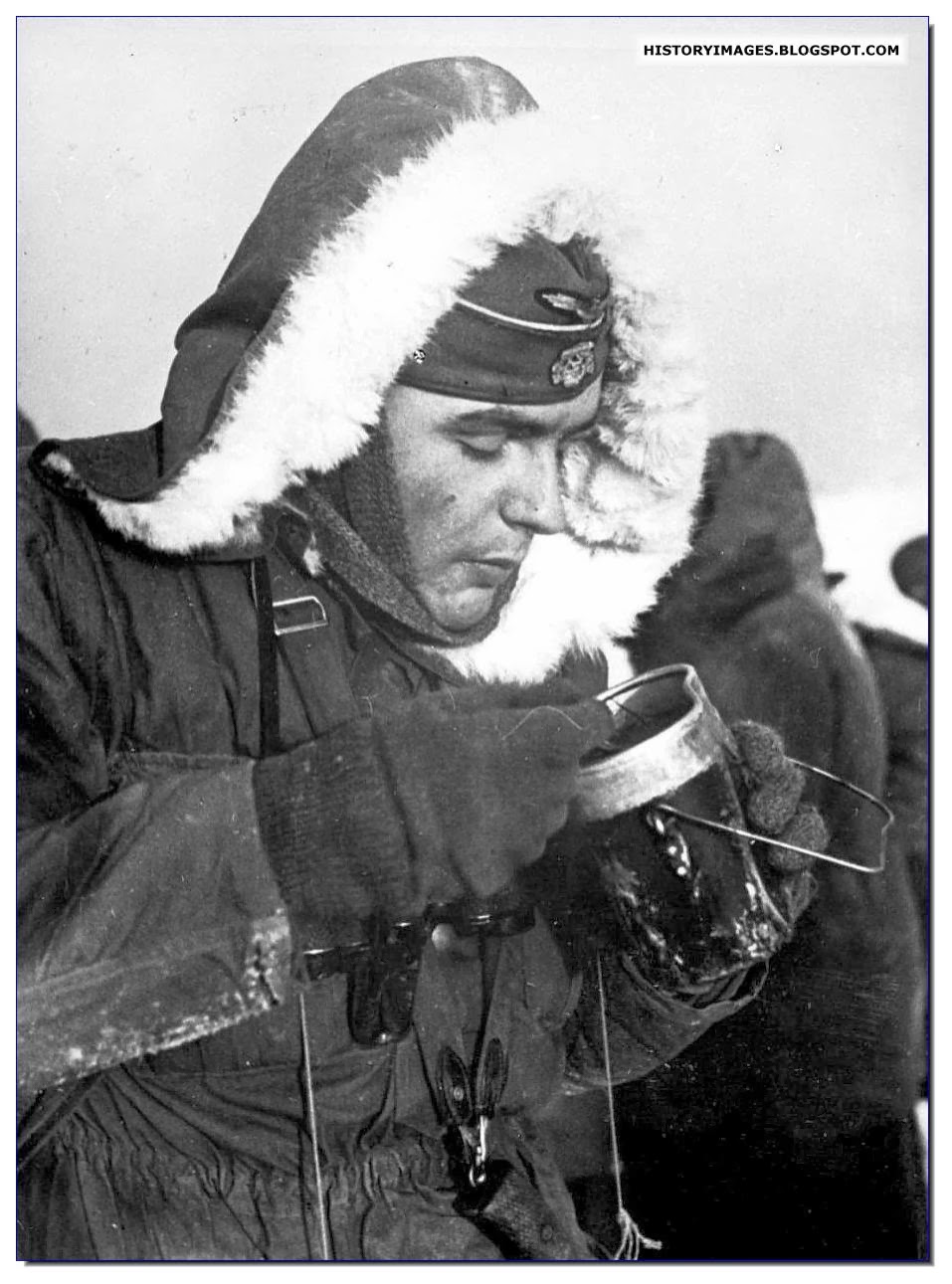
The row has broken out again over the issue of the German government paying pensions to German soldiers, including those in the Waffen SS who fought during the Second World War.
According to a
recent BBC report a Belgian minister has raised objection to German government paying pension to over 2500 Belgians who fought in Hitler's army during 1939-45.
The subject kicks up a hornets nest now and then even after 80 years since WW2 ended.
The argument is that many of the pension beneficiaries are former Nazis.
We have no argument with Nazis who committed crimes being not only disbarred from pension benefits but if possible being tried.
But why paint all German soldiers with the same brush. For example the men of the Waffen SS were soldiers, barring the Totenkopf. They were elite soldiers, like tahe American Green Berets or Navy Seals.
They fought and fought hard for their country. Their misfortune was Germany lost WW2.
Pin pricking about pensions to these few surviving men seems a bit low.
Did anyone talk about depriving them of pensions?
Germany lost a war in 1945. It suffered untold miseries. It's people were tortured, abused, humiliated. Let us leave the Germans alone, now. Let them deal with the matter as they deem fit. They know their country better than we do.
It is time to stop berating Germans for the sins of a few twisted individuals who controlled their country during that time in history. They have paid much. Let us not open unhealed wounds again. More than 80 years have passed. It will be playing into the hands of the neo-Nazis this incessant harping.
Remember the bible quote about the totally blameless throwing the first stone? No country was totally blameless before, during and after WW2.

Greek soldiers taken prisoner sit around as a German guard watches over them. May-June 1941. Mussolini attacked the Greeks first but was thrown back by the tough Greek fighters. Hitler then steeped in. He wanted to protect the Balkans to keep the British out from getting a toehold. The Greek army however brave was no match for the Wehrmacht.
For propaganda? Or kind Germans? Two German soldiers support a wounded Canadian soldier after the Dieppe raid. August 1942.
French legion of the German army (638th Infantry Regiment) on its way to Moscow from Smolensk. November 1941.
German soldiers prepare a "Goliath" during the suppression of the Warsaw Uprising. August 11, 1944. (Image by Gutermann)
A Waffen SS soldier chats with Soviet women at Belgorod. 1943. It would be interesting to know what the conversation was about. We will never know.
Occupied Greece. April 1941. Sepp Dietrich of the 1st SS Panzer Division "Leibstandarte SS Adolf Hitler" talks to Greek prisoners.
Soviet citizens about to be hanged by the Germans. Hitler's orders for Barbarossa was that all Soviet Commissars and partitions were to be executed immediately. The so-called "Commissar Order".
German soldiers listen carefully to what this Russian lady is saying. Novorossiysk, 1942. Why do men always listen carefully when a woman speaks? Be it war or during peace.
September 18, 1944. Germans carry their wounded during the Warsaw Uprising.
German soldiers crouch behind a Stug 3 assault gun in the outskirts of Stalingrad. 1942
German soldiers in a ruined factory in Stalingrad. November 1942. The photo was published on the cover of "Munchner Illustrierte Presse" of 10 December 1942.
French soldiers in the German army. French Legion of Wehrmacht soldiers during a show in Smolensk before the march on Moscow. November 1941.
American Lieutenant General Mark Clark sits on the window sill of a house in liberated Rome. 1944.
Mussolini with a group of German and Italian military at the "Campo Imperatore" after release. He was rescued by a group of SS soldiers led by Otto Skorzeny (seen on the left of Mussolini) in September 1943.
1940. Captured French pilots chat with German soldiers.
Not a very nice man. A Waffen SS soldiers kicks a captured Russian pilot. Kursk, 1943.
Near Leningrad. This German hardly seems to have any reverence towards Lenin. He is using the statue as a sign-post.
Tough battle-hardened Waffen SS soldiers at Kharkov. 1943. They were by now fighting a losing war.
Polish employees of the Post Office at Danzig along with a few militia put up strong resistance. The Germans had to blow down a wall using three guns and use flame-throwers to subdue them. September 1939.
War destroys. Soviet soldiers walk through a devastated Warsaw. 1945.
A horse stands shaken amidst a destroyed Stalingrad. 1942.
Related
German soldiers hiding behind the pillars of the Grand Opera in Warsaw as they crush the uprising.
The Polish are a very fiercely proud people. So when the Treaty of Versailles gave birth to an independent Poland in 1919, it delighted the Polish heart. But not for long. In 1939 Germany and Soviet Russia swallowed it up after partitioning it.
1944. The Germans are being beaten thoroughly by the advancing Red Army. The Polish Home Army (Armia Krajowa, the non-communists) thought the time was ripe to throw the Germans out themselves so that they could claim the right to rule Poland in a post-German era.
The Home Army thought that the Red Army on the other side of the Vistula would lent a helping hand. But the Russians just watched as the Uprising was brutally crushed by the Germans.
Many say Stalin did not help the uprising because he wanted a pro-Soviet communist government in Poland. This is partly the truth. The Red Army had been on the heels of the retreating Germans for months after Operation Bagration. The supply lines were stretched. The Russians soldiers were tired.
But one must admire the bravery of the Polish who took on the Germans themselves in 1944. What happened is a heart-wrenching story of how the Germans squashed the Warsaw Uprising and eliminated the brave men of Armia Krajowa.
Warsaw insurgents put up a barricade on a Warsaw street. September 1944.
A SS non-commissioned officer inspects the bodies of two of the Warsaw insurgents killed in the Old Town. November 1944.

A group of German prisoners captured by Warsaw insurgents near the building of the Polish telephone company. August 1944. Don't be confused by the guards wearing German Stahlhelm helmets. The Polish fighters used them too.
Moments of despair. Polish Home Army fighters with a 7.92 machine gun (A Polish version of the American Browning gun) in October 1944 sometime before surrender to the Germans in the center of a devastated Warsaw.
September 7, 1944. Representatives of the Polish Red Cross arrive blindfolded to meet German military policemen to negotiate safe passage of civilians.
Armia Krajowa fighters ride a captured German armored carrier on the streets of Warsaw. August 1944.

The uprising was brutally broken by the SS, Police, penal battalions and Russian collaborators. Men from the Russian People's Liberation Army are seen here with SS men.
German collaborators included the Russian Cossacks. Seen here are Cossacks (the one with a helmet on is an officer) watching the suppression of the uprising.
August 1944. German prisoners led by a Home Army soldier.
A Polish civilian woman killed during a German air raid at 10 Moniuszko Street, Warsaw. September 1944.
German prisoners marked with swastika line up by the insurgents against the wall of the ghetto on Bonifraterska Street. Were they shot later?
The Germans used massive 600 mm guns to flatten insurgent positions. Here the Prudential building is hit. It collapsed in seconds.
Germans use the Wurfrahmen 40 multiple rocket launchers against the Home Army positions. September 1944.
Warsaw burns during the Uprising
Polish general Komorowski rides to surrender to the Germans. October 4, 1944.
Komorowski after surrender with Obergruppenfuhrer Erich von dem Bach-Zelewski
Bach Zelewski welcomes back captured Germans.
Home Army fighters surrender.
Germans pull out a Armia Krajowa man from a man hole
The Polish insurgents hand over their arms.
Armia Krajowa fighters march into captivity. Very few were left alive by the Germans.

Two American soldiers inspect a German Tiger tank at the Belgian village of Corenne, February, 1945. The third is admiring the passing Belgian women who too seem interested in the Americans
Romanian soldiers prepare to fire a mortar somewhere in the Caucasus. April 30, 1943.
A German soldier directs German war machines in the vicinity of Moscow. Winter 1941. He looks haggard.
Anton Klein a warden at the Mauthausen-Ebensee concentration camp moments before his hanging on November 5, 1948 at Landsberg, Germany.
British soldiers at a Norwegian village in 1940. They were soon thrown out by the Germans.
An officer of the Waffen SS 'Florian Geyer' (8th SS Cavalry Division) eats on the eastern front in 1943. These men were used in anti-partisan actions in 1943.
The end was nearing. German soldiers in an Italian town with a Tiger tank in 1944
German paratroopers jumping into Netherlands from a Ju 52 plane. May 1, 1940
Germans with North African (most probably Senegalese] French POW at St. Cloud, A suburb of Paris. 1940.
German groundsmen preparing the fighter bomber Focke-Wulf Fw.190A-5 at Kharkhov, Russia. April 1943.
An American soldier points to the head wounds of a dead soldier shot by the SS at Malmedy in December, 1944
General Leclerc of the Free French 2nd armored division gives orders after reaching Paris. August 25, 1944. The French made a rush for Paris despite American orders to the contrary to revive some of the French pride which was lost in 1940.
A Soviet T-34 tank burns on the outskirts of Moscow. December 1941. But the Germans never reached Moscow.
British POW line up for lunch at Trondheim, Norway. May 1940. Hardly the proud, gritty British.
German soldiers march in Norway. 1940.
1940. German soldiers having soup on the street of a Danish village.
Germans firing a 20 mm Flak 30 anti-aircraft gun in Italy. 1943.
American POW walking through a Belgian village. December 1944.
Red Army prisoner-of-war about to be sent deep into Finland by train during the Soviet-Finnish War in 1940.
Vision of a nightmare come true for the Germans. Red Army soldiers in Berlin. April, 1945.
American pilots aboard the light aircraft carrier 'Monterey' before flying out to attack the Japanese fleet during the Battle of the Mariana Islands. June 1944.
RELATED....
INCOMPLETE....WORK IN PROGRESS....
Popular Articles On This Site
-
The German women raped and forced into sexual slavery at the end of WW2 are still among the most forgotten, suppressed, ridiculed vi...
-
As the 1945 began, the Russian army inexorably began to close into Germany. The result was foregone. But for the Nazi regime and the Ger...
-
Guido Knopp, sums the Waffen-SS perfectly in his documentary “Waffen SS – Hitler’s Elite Fighting Force”: “Had that marvellous courage ...
-
As described by both Churchill and Elliott Roosevelt in their memoirs, "Stalin rose and proposed a blood-curdling toast. The streng...
-
In the years 1945 to 1946 Germany was a collection of denouncers, black-marketeers, prisoners, refugees from justice and tireless whingers....
-
Two Waffen SS soldiers have a drink. In the background burns a T-34 tank Boys will be boys! SS troops welcomed by Ukrainian g...
-
Wounded German soldiers near Minsk, Belarus. 1944. It was a painful process. The once mighty Wehrmacht was slowly disintegrating. It ...
-
Going about their daily work. Einsatzgruppe killing Poles. Einsatzgruppen. In German it means an innocuous, "task force". In...
-
Berlin. April 1945. Apocalypse. Hell on Earth. This savage battle on this ancient cultured city is perhaps one of the most brutal battl...
Points To Ponder
WHY WAS THE FIGHTING ON THE RUSSIAN FRONT SO FIERCE DURING WW2?
It is difficult to distinguish between the quality of both the German and Russian soldiers. Both were motivated by their love for their motherland. But there were others factors that drove the two sides to such desperate fighting.
One, both sides knew that this was a no-holds bar war. Not fighting was thus not an option.
Second, both Hitler and Stalin had squads that killed any deserter. Turning away from fighting was just not possible.
Thus was seen some of the most bitter, brutal and desperate fighting on the WW2 eastern (Russian) Front.
"Those who do not remember the past are condemned to repeat it."
-- George Santayana
Quotes....
"Be polite; write diplomatically; even in a declaration of war one observes the rules of politeness."
--Otto von Bismarck
"When the enemy advances, withdraw; when he stops, harass; when he tires, strike; when he retreats, pursue.'
--Mao Zedong
Quotes....
"The main thing is to make history, not to write it."
--Otto von Bismarck
"When you have to kill a man it costs nothing to be polite."
--Winston Churchill
Quotes....
"In time of war the loudest patriots are the greatest profiteers."
--August Bebel
"God is not on the side of the big battalions, but on the side of those who shoot best."
--Voltaire
Quotes about War....
"Anyone who has ever looked into the glazed eyes of a soldier dying on the battlefield will think hard before starting a war."
---Otto von Bismarck
Quotes....
"Naturally the common people don't want war; neither in Russia, nor in England, nor in America, nor in Germany. That is understood. But after all, it is the leaders of the country who determine policy, and it is always a simple matter to drag the people along, whether it is a democracy, or a fascist dictatorship, or a parliament, or a communist dictatorship. Voice or no voice, the people can always be brought to the bidding of the leaders. That is easy. All you have to do is to tell them they are being attacked, and denounce the pacifists for lack of patriotism and exposing the country to danger. It works the same in any country."
--Hermann Goering
Quotes....
"To conquer the enemy without resorting to war is the most desirable. The highest form of generalship is to conquer the enemy by strategy."
--Tzu Sun
"All men are brothers, like the seas throughout the world; So why do winds and waves clash so fiercely everywhere?"
--Emperor Hirohito